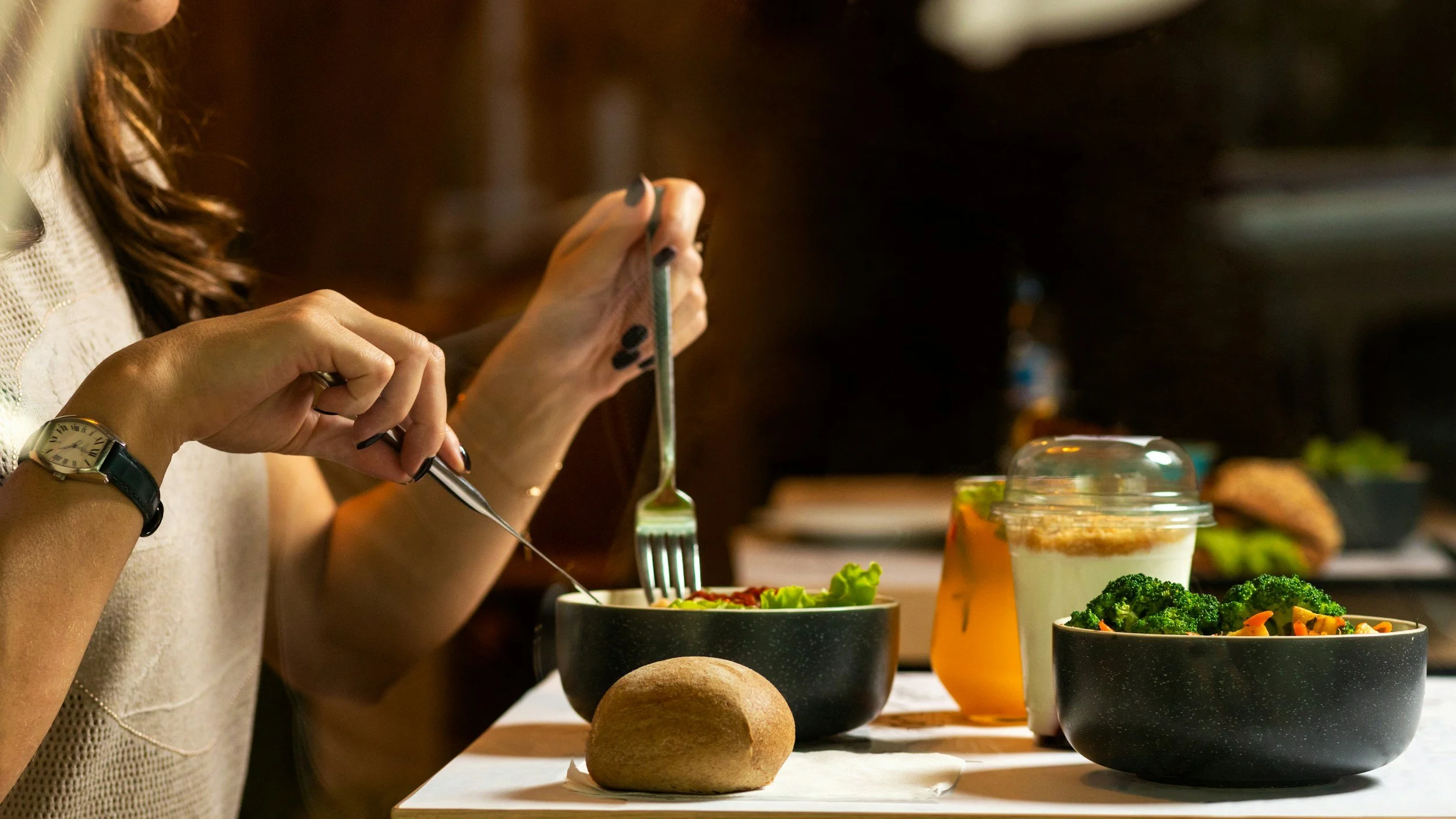

How To Eat For Optimal Health

There’s a lot of noise about what you should or shouldn’t be eating.
I want to start by saying you have autonomy over what you choose to do and ultimately you know your body best.
Of course guidance from a practitioner can help identify insights to guide you forward. But if you are taking all of your health advice from an influencer online, this is where things can go sideways.
Food can be a very polarizing topic online, so let’s cut through the noise and talk about what we know to be true.
First, let’s simplify what your body actually needs. No matter your goal, when it comes to food your body thrives on a few key things:
Stable blood sugar
Adequate protein
Healthy fats
Fiber
Regular meal timing
When these are in place hormones are more stable, digestion improves, and energy becomes more consistent.
How To Put This Into Practice
Before we get into a full day, here’s the foundation. Meals should include:
Protein (a good benchmark is 20–30g per meal)
Healthy fats
Fiber (veggies, fruit, or complex carbs)
Carbohydrates (amount varies based on the person)
This is what keeps blood sugar stable and prevents the crashes, cravings, and inflammation that impact everything else.
In the Morning
Aim to have your first meal within 1-2 hours of waking.
Skipping breakfast or relying on coffee alone is one of the fastest ways to dysregulate blood sugar and cortisol.
Breakfast ideas:
Eggs + sautéed spinach + avocado + berries
Greek yogurt + chia seeds + almond butter + blueberries
Smoothie with protein powder, frozen berries, flax, and nut butter
Chicken sausage + sautéed peppers and onions
Overnight oats with protein powder, chia seeds, almondmilk, cinnamon, and honey
The meals are intentional. Protein + fat for stable energy. Fiber to support the gut microbiome + blood sugar support. They also have micronutrients to support skin + immune health.
And pro tip is to have your morning caffeine with or after your morning meal for blood sugar and cortisol support.
Midday
This is where a lot of people under eat or grab something quick and unbalanced. Then 3pm hits and everything falls apart.
Lunch ideas:
Grilled chicken bowl with quinoa, roasted veggies, olive oil
Salmon, tuna, or chicken salad with seed crackers
Ground beef tacos with avocado, onions, cilantro, on cassava tortillas
Balanced snack plate with nuts, hard cheese, olives, hummus, veggie sticks, seed crackers, and a meat stick
Tin fish (like sardines, salmon, or mackerel) with rice and sliced cucumber
This meal sets up your afternoon energy, cravings, and focus
Afternoon Snack (If Needed)
Not everyone needs this, but if you are going >4–5 hours between meals, you’re crashing or getting irritable before dinner, try adding in a snack.
The goal here is to prevent blood sugar dips to keep energy stable.
Balanced snack ideas:
Apple + nut butter
Cottage cheese + berries
Hard cheese with nuts + olives
Meat bar or beef stick + dried fruit
Protein bar like Aloha, Paleovalley, or RXbar
Evening
Focus on simple and quick recipes to round out the day.
A go to of ours are DIY bowls. Pick one from each:
Protein: chicken, turkey, ground beef, tofu, tempeh, salmon
Carb: potatoes, rice, quinoa, beans, squash
Veg: any roasted or sautéed veggie, leafy greens
Flavor: pesto, chimichurri, tahini, lemon, salsa, olive oil
Mix and match based on what’s already in your fridge.
A Quick Note on Meal Timing
A good baseline is to eat every 3–4 hours, avoid long gaps without food, and try not to “graze” all day.
Your body likes routine. This supports:
Blood sugar regulation
Cortisol balance
Digestion
Hunger cues
You don’t need to overhaul everything overnight.
Start with building more balanced meals, eating consistently, and making sure you’re actually eating enough
That alone will move the needle more than constantly searching for the “perfect” diet.
If you want more guidance on how to personalize this for your body, this is exactly what we do inside our programs.
Because it’s not just about what to eat. It’s about what works for you!