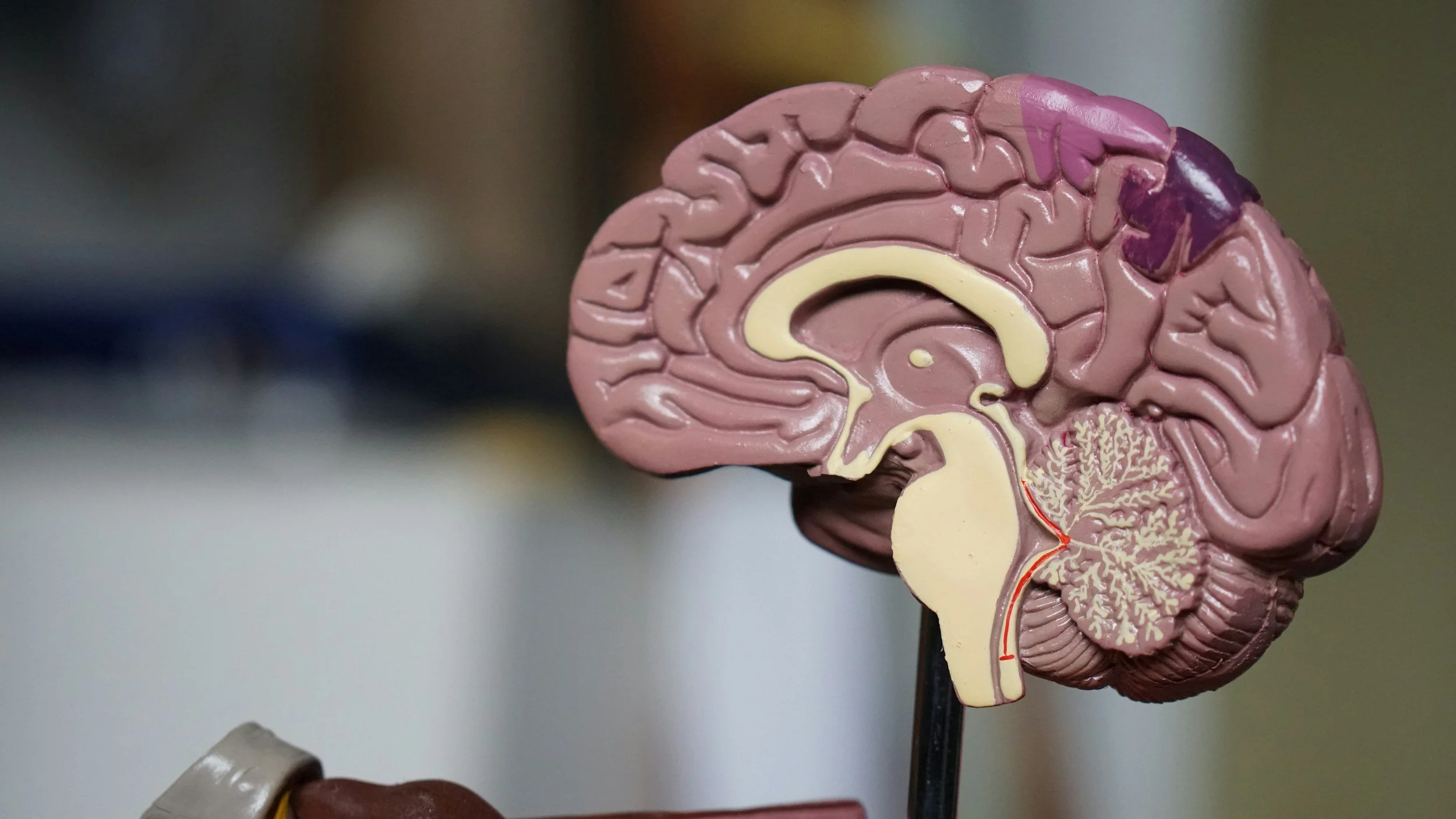


Have you ever felt like you're doing everything right but still aren't seeing the progress you expected?
One of the biggest misconceptions in the health space is that healing only happens through the physical body.
The reality is that your nervous system, subconscious mind, and brain play a significant role in shaping your health experience.
Neuroscience shows us that chronic symptoms are influenced by much more than biology alone. The brain is constantly interpreting information, creating patterns, predicting outcomes, and determining what feels safe.
Let's talk through 5 neuroscience-backed reasons you may still feel stuck in your healing journey.
1. Chronic Symptoms Can Become Hardwired Into the Brain
When symptoms persist for months or years, the brain can begin to memorize them.
The nervous system learns through repetition. Just like learning to ride a bike or drive a car eventually becomes automatic, chronic symptom patterns can become deeply ingrained neural pathways.
Over time, the brain becomes highly efficient at producing the same stress responses, pain signals, digestive symptoms, or inflammatory patterns.
This doesn't mean the original physical trigger isn't important. It means that at some point, healing often requires addressing both the body and the brain.
This is why some people continue to experience symptoms long after they've addressed many of the underlying physical factors.
2. The Story You Tell Yourself About Your Symptoms Matters
Our brains assign meaning to everything.
If every symptom is interpreted as dangerous, scary, or proof that something is wrong, the nervous system remains on high alert.
For example:
"My bloating means my gut is broken."
"This symptom means I'm getting worse."
"I'll never get better."
These thoughts aren't just mental experiences. They create physiological responses.
The brain and body are constantly communicating.
When the brain perceives threat, it can increase stress hormones, inflammation, muscle tension, and nervous system activation.
The goal is to create a more supportive and flexible narrative around your healing process and understanding that symptoms are a form of expression - our body’s way of communicating.
3. Your Brain Creates Reality Based on the Past
Your brain is not simply observing the world, it's predicting it. Based on your previous experiences, beliefs, and memories, your brain continuously makes predictions about what will happen next.
If you've spent years feeling exhausted, inflamed, anxious, or symptomatic, your brain begins to expect more of the same.
This can create a cycle where your attention is automatically drawn toward evidence that confirms those expectations.
The brain isn't trying to keep you stuck, it's trying to keep you safe by relying on familiar patterns.
4. Your Brain Is Wired to Look for Problems
Humans have a built-in negativity bias. From an evolutionary perspective, our brains are designed to scan for threats and dangers, and this helped our ancestors survive. But in modern life, it can cause us to become hyper focused on what's not working.
Many people on a healing journey are monitoring symptoms, analyzing every sensation, researching new diagnoses, and searching for the next thing that might be wrong.
While awareness can be helpful, constant symptom monitoring can reinforce the brain's focus on illness.
The more attention we give something, the more important the brain perceives it to be.
One of the most powerful healing practices can be intentionally noticing what is going right.
Small improvements matter, moments of resilience matter, and evidence of healing matters.
5. What Looks Like Self-Sabotage Is Often Self-Protection
Many people become frustrated with themselves when they struggle to stay consistent.
The answer is often not a lack of willpower, it's protection. Your brain and nervous system are wired to prioritize familiarity.
Even if an old pattern isn't serving you, it may still feel safer than the unknown.
This is why lasting change requires more than discipline.
It requires helping the brain and body feel safe in new ways of being.
As your nervous system learns that healing, health, and feeling good are safe experiences, those new patterns become easier to sustain.
Healing Is More Than Physical
The physical body matters.
Nutrition matters.
Gut health matters.
Hormones matter.
Lab testing matters.
But true healing often requires supporting the emotional, mental, and neurological aspects of health as well.
This is one of the reasons every client in our 1:1 Functional C.A.R.E Method™ receives access to Manifest Your Health™.
Healing isn't just about changing your biology, it's about creating new patterns, new beliefs, and a nervous system that feels safe enough to support lasting change.
When we address both the physical body and the brain, healing often becomes more sustainable, more empowering, and more complete.